Ariel Bibeau
arielbibeau@gmail.com
UX design · Game design · Concepting · Prototyping
Google I/O 2023
A globally distributed browser-based puzzle that turned programmable weaving into a collaborative reveal.
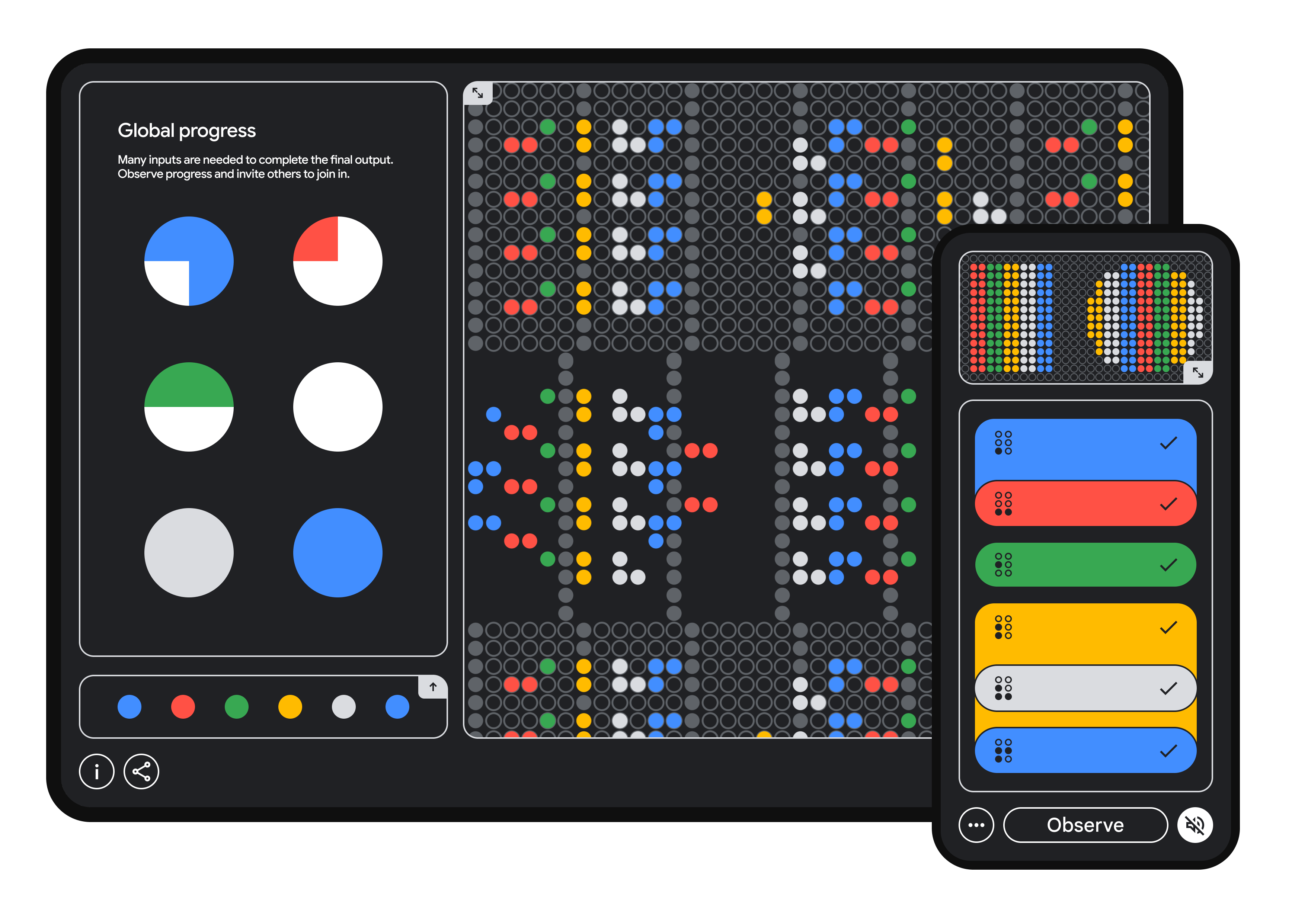
Each year, Google announces I/O with a save-the-date puzzle designed to challenge and delight developers. In 2023, the prompt was unusually open-ended: create a puzzle that celebrates developer craft, scales globally, and unfolds collaboratively—without relying on backend logic.
We reimagined the I/O reveal as a programmable tapestry, weaving together input-output logic and early computing metaphors. The final experience invited thousands of players to solve modular puzzles and collectively unlock the conference date through a dynamic visual output.
Challenge
Design a brower-based puzzle that:
- Celebrated developer history and technical craft
- Invited participation from a broader tech audience
- Functioned collaboratively without using a shared backend
- Could scale across mobile and desktop devices
- Was solvable—but not too quickly
The experience had to work on multiple levels: entertaining seasoned puzzle solvers, staying accessible to less technical users, and unfolding over time to maximize social buzz.
Concept
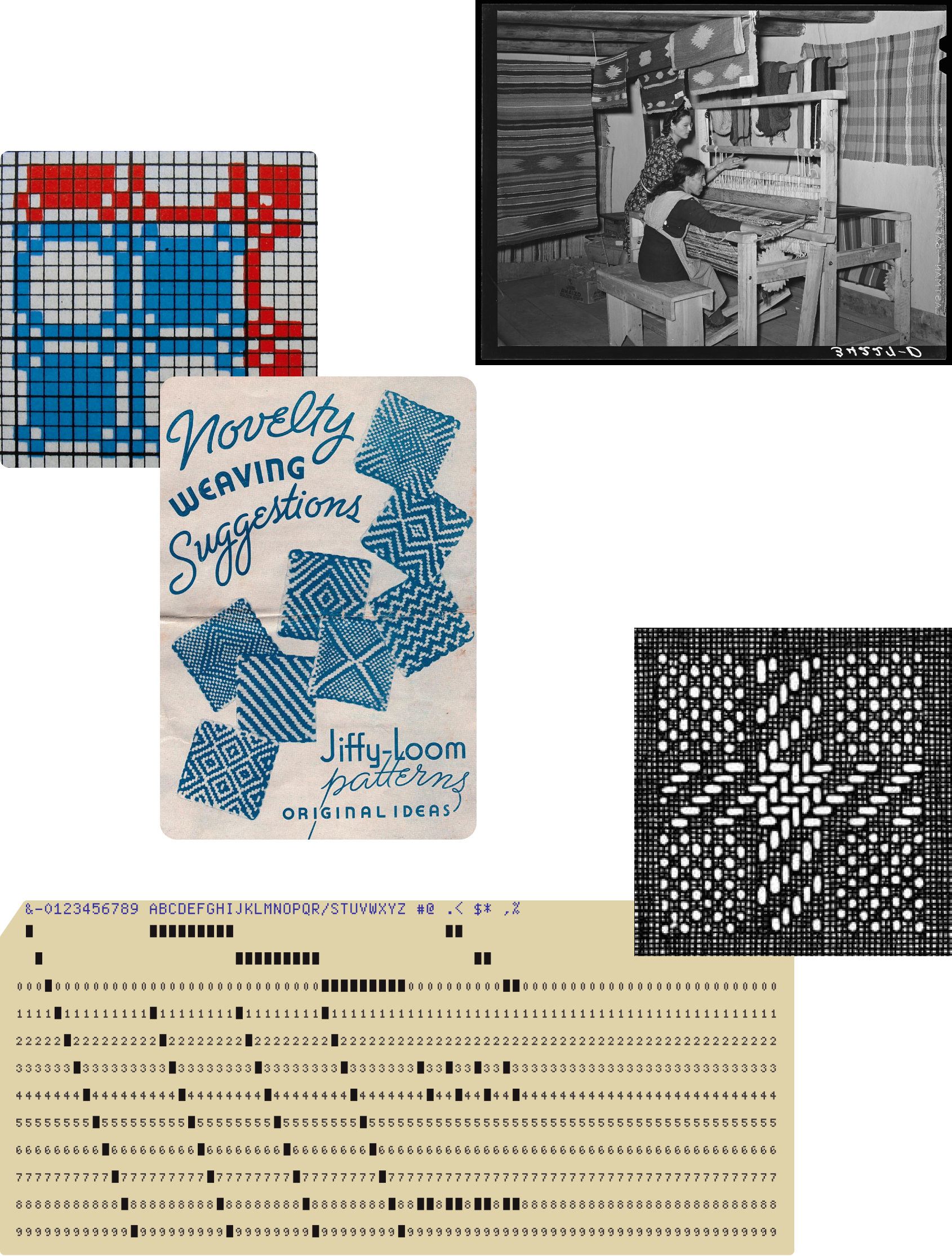
Inspired by the lineage of mechanical looms and punch cards, we grounded the experience in weaving-as-programming—a metaphor that felt both technically rich and visually expressive. The final reveal would be a woven tapestry spelling “I/O,” assembled from many smaller puzzle inputs.
We prototyped both the math and visuals using Codepen and Figma. Matrix multiplication guided our logic, but we simplified the interactions so that players could participate without needing a math degree. Multiple puzzle types added variety, culminating in a final interaction where players had to reorder the interface itself to trigger the final output.
Systems Design
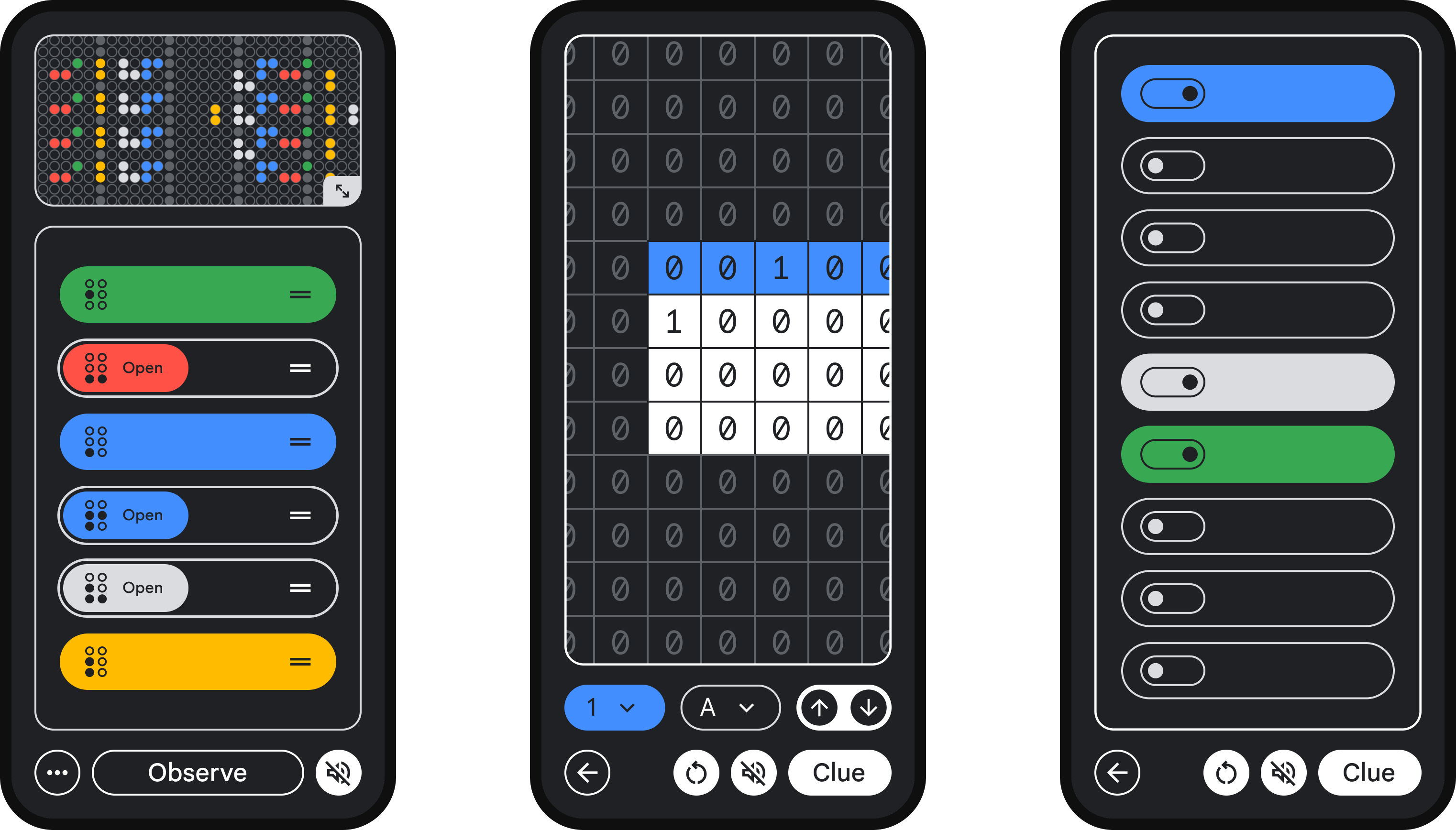
The experience was built around a modular dashboard where players could explore, solve, and observe progress in real time. I designed the puzzle user experience and game mechanics, crafting a flexible interaction model that scaled across screen sizes. Mobile presented unique challenges: with fewer visible puzzle modules, we created embedded cues—through iconography, color, and active states—to maintain clarity and continuity.
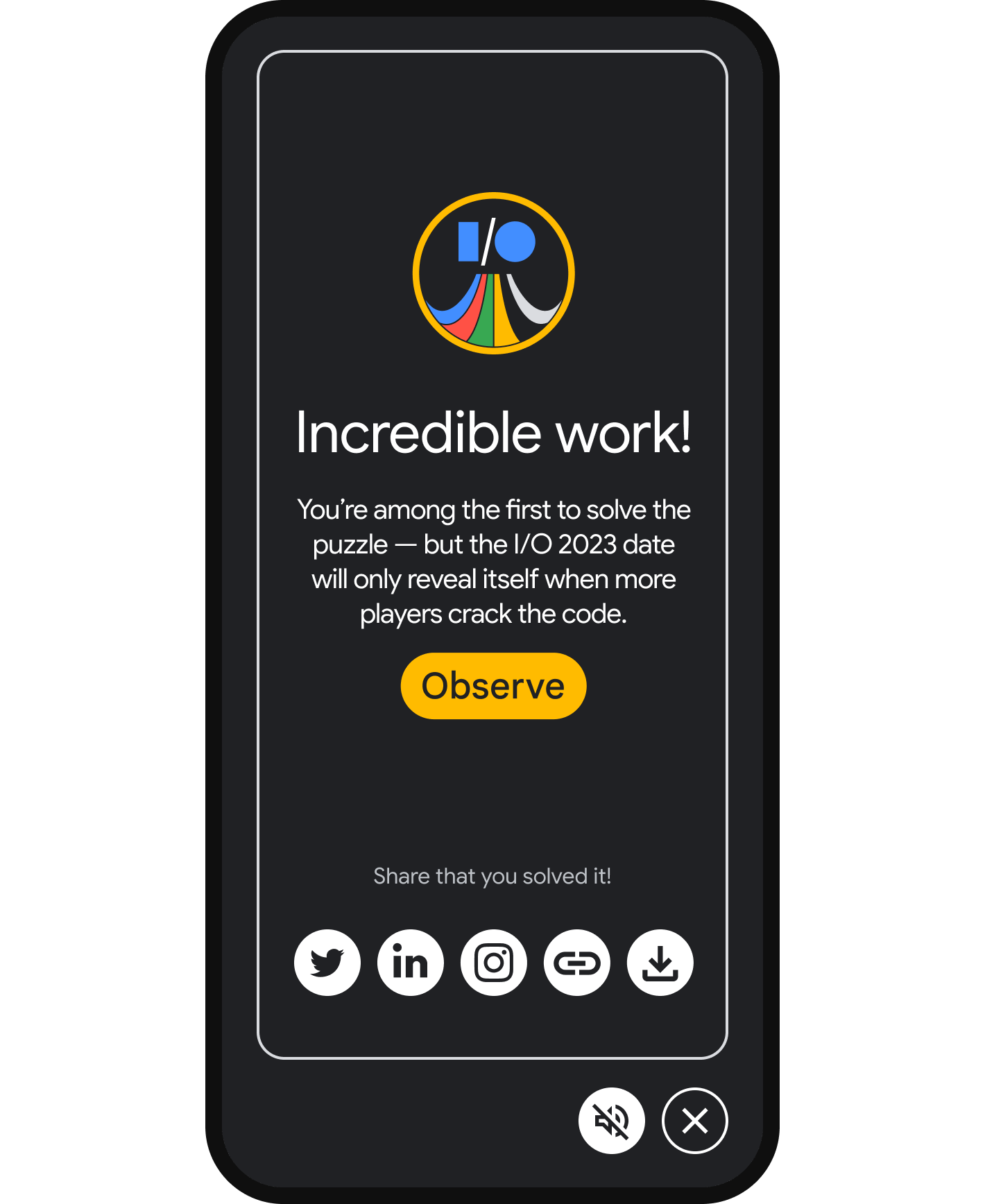
We intentionally structured the experience to reveal puzzles over time. Clues were posted via @googledevs to pace solves and build momentum. Once enough puzzles were solved globally, the woven “I/O” output was unlocked—and could be shared as a badge or on social.
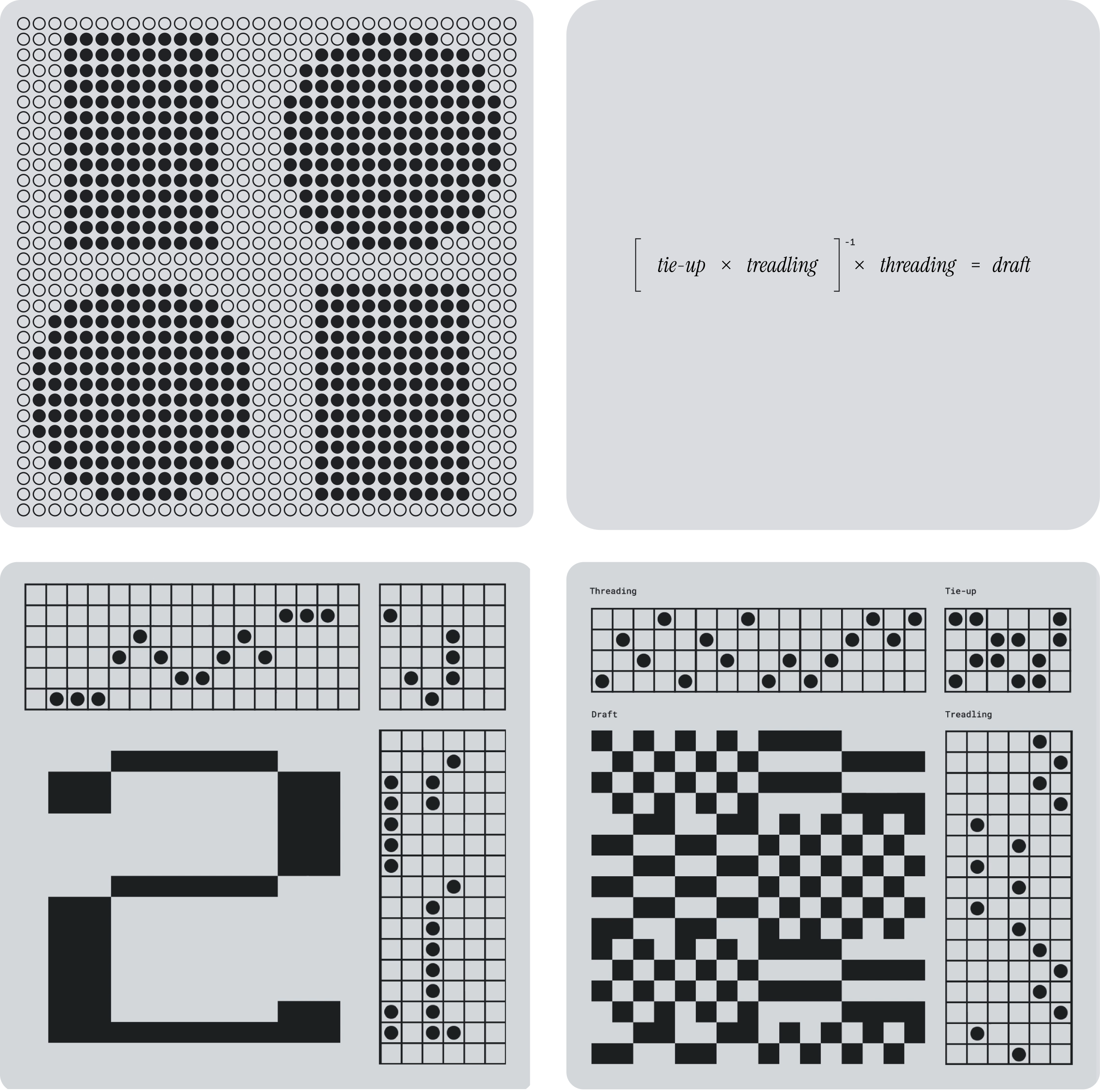
Matrix multiplication logic
Outcomes
- The puzzle received record engagement across Google’s puzzle history
- Covered by 9to5Google, Gizmodo, Google’s own blog, and across global social media conversation
- Solved over 1,000 times in the first few hours
- Reached a wide range of players, from developers to Product Managers, and encouraged both active solving and passive viewing
- Successfully scaled across devices, regions, and experience levels, beyond previous years
Collaborators
Developer Marketing team at Google, Brand and Events teams at Google, Left Field Labs engineers and producers, mutli-disciplinary Instrument team
Responsibilities
UX design, puzzle mechanics, dashboard structure, interaction model, visual system prototyping
Duration
3 months
Role
Lead interaction designer
Ariel Bibeau
arielbibeau@gmail.com
UX design · Game design · Concepting · Prototyping
Google I/O 2023
A globally distributed browser-based puzzle that turned programmable weaving into a collaborative reveal.
Each year, Google announces I/O with a save-the-date puzzle designed to challenge and delight developers. In 2023, the prompt was unusually open-ended: create a puzzle that celebrates developer craft, scales globally, and unfolds collaboratively—without relying on backend logic.
We reimagined the I/O reveal as a programmable tapestry, weaving together input-output logic and early computing metaphors. The final experience invited thousands of players to solve modular puzzles and collectively unlock the conference date through a dynamic visual output.
Challenge
Design a brower-based puzzle that:
- Celebrated developer history and technical craft
- Invited participation from a broader tech audience
- Functioned collaboratively without using a shared backend
- Could scale across mobile and desktop devices
- Was solvable—but not too quickly
The experience had to work on multiple levels: entertaining seasoned puzzle solvers, staying accessible to less technical users, and unfolding over time to maximize social buzz.
Concept
Inspired by the lineage of mechanical looms and punch cards, we grounded the experience in weaving-as-programming—a metaphor that felt both technically rich and visually expressive. The final reveal would be a woven tapestry spelling “I/O,” assembled from many smaller puzzle inputs.
We prototyped both the math and visuals using Codepen and Figma. Matrix multiplication guided our logic, but we simplified the interactions so that players could participate without needing a math degree. Multiple puzzle types added variety, culminating in a final interaction where players had to reorder the interface itself to trigger the final output.
Systems Design
The experience was built around a modular dashboard where players could explore, solve, and observe progress in real time. I designed the puzzle user experience and game mechanics, crafting a flexible interaction model that scaled across screen sizes. Mobile presented unique challenges: with fewer visible puzzle modules, we created embedded cues—through iconography, color, and active states—to maintain clarity and continuity.
We intentionally structured the experience to reveal puzzles over time. Clues were posted via @googledevs to pace solves and build momentum. Once enough puzzles were solved globally, the woven “I/O” output was unlocked—and could be shared as a badge or on social.
Matrix multiplication logic
Outcomes
- The puzzle received record engagement across Google’s puzzle history
- Covered by 9to5Google, Gizmodo, Google’s own blog, and across global social media conversation
- Solved over 1,000 times in the first few hours
- Reached a wide range of players, from developers to Product Managers, and encouraged both active solving and passive viewing
- Successfully scaled across devices, regions, and experience levels, beyond previous years
Collaborators
Developer Marketing team at Google, Brand and Events teams at Google, Left Field Labs engineers and producers, mutli-disciplinary Instrument team
Responsibilities
UX design, puzzle mechanics, dashboard structure, interaction model, visual system prototyping
Duration
3 months
Role
Lead interaction designer
Ariel Bibeau
arielbibeau@gmail.com
UX design · Game design · Concepting · Prototyping
Google I/O 2023
A globally distributed browser-based puzzle that turned programmable weaving into a collaborative reveal.
Each year, Google announces I/O with a save-the-date puzzle designed to challenge and delight developers. In 2023, the prompt was unusually open-ended: create a puzzle that celebrates developer craft, scales globally, and unfolds collaboratively—without relying on backend logic.
We reimagined the I/O reveal as a programmable tapestry, weaving together input-output logic and early computing metaphors. The final experience invited thousands of players to solve modular puzzles and collectively unlock the conference date through a dynamic visual output.
Challenge
Design a brower-based puzzle that:
- Celebrated developer history and technical craft
- Invited participation from a broader tech audience
- Functioned collaboratively without using a shared backend
- Could scale across mobile and desktop devices
- Was solvable—but not too quickly
The experience had to work on multiple levels: entertaining seasoned puzzle solvers, staying accessible to less technical users, and unfolding over time to maximize social buzz.
Concept
Inspired by the lineage of mechanical looms and punch cards, we grounded the experience in weaving-as-programming—a metaphor that felt both technically rich and visually expressive. The final reveal would be a woven tapestry spelling “I/O,” assembled from many smaller puzzle inputs.
We prototyped both the math and visuals using Codepen and Figma. Matrix multiplication guided our logic, but we simplified the interactions so that players could participate without needing a math degree. Multiple puzzle types added variety, culminating in a final interaction where players had to reorder the interface itself to trigger the final output.
Systems Design
The experience was built around a modular dashboard where players could explore, solve, and observe progress in real time. I designed the puzzle user experience and game mechanics, crafting a flexible interaction model that scaled across screen sizes. Mobile presented unique challenges: with fewer visible puzzle modules, we created embedded cues—through iconography, color, and active states—to maintain clarity and continuity.
We intentionally structured the experience to reveal puzzles over time. Clues were posted via @googledevs to pace solves and build momentum. Once enough puzzles were solved globally, the woven “I/O” output was unlocked—and could be shared as a badge or on social.
Matrix multiplication logic
Outcomes
- The puzzle received record engagement across Google’s puzzle history
- Covered by 9to5Google, Gizmodo, Google’s own blog, and across global social media conversation
- Solved over 1,000 times in the first few hours
- Reached a wide range of players, from developers to Product Managers, and encouraged both active solving and passive viewing
- Successfully scaled across devices, regions, and experience levels, beyond previous years
Collaborators
Developer Marketing team at Google, Brand and Events teams at Google, Left Field Labs engineers and producers, mutli-disciplinary Instrument team
Responsibilities
UX design, puzzle mechanics, dashboard structure, interaction model, visual system prototyping
Duration
3 months
Role
Lead interaction designer